Hannya Mask | Meaning, Symbolism and The Truth Behind Japan's Most Haunting Demon
Few symbols in Japanese culture carry as much psychological depth and visual power as the hannya mask. A face frozen between grief and fury, beauty and terror — this ancient theatrical mask has transcended its origins to become one of the most recognized and meaningful symbols in Japanese art, tattoo culture and global fashion.
Whether you're drawn to the hannya mask meaning, considering a hannya mask tattoo or simply want to understand what this powerful symbol truly represents — this is the complete guide.
What Is A Hannya Mask?
The hannya mask is a traditional Japanese Noh theatre mask representing the spirit of a woman transformed into a demon by jealousy and obsession. Used in Japanese Noh theatre for over six centuries, it is one of the most psychologically complex masks in world theatrical history.
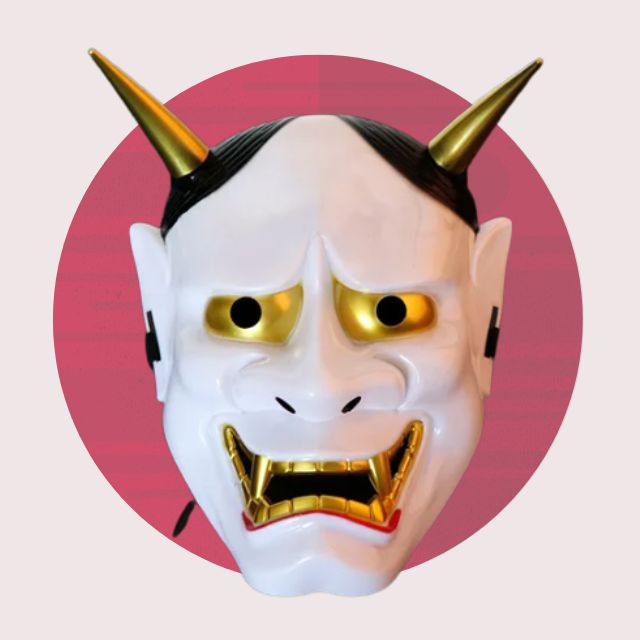
Instantly recognizable by its curved horns, hollow triangular eyes, contorted grimace and golden teeth — the hannya carries a dual emotional nature unlike any other Japanese demon mask. Tilted downward the face appears consumed by sorrow. Tilted upward it radiates pure demonic rage. This duality — the coexistence of grief and fury within a single expression — is what makes it one of the most emotionally powerful symbols in Japanese cultural history.
The name Hannya derives from the Sanskrit word prajna meaning wisdom — specifically the Buddhist concept of transcendent wisdom achieved through suffering and transformation.
The Hannya Mask Meaning
Understanding the hannya mask meaning requires understanding the story behind it.
In Japanese Noh theatre, the hannya represents a specific character — a woman of beauty and refinement whose obsessive jealousy has consumed her humanity entirely. She has crossed the threshold between the human world and the supernatural, becoming something that is neither fully human nor fully demon. She is trapped between worlds — defined by an emotion she could not release.
This is what makes the hannya mask meaning so layered and universally resonant:
Jealousy and Obsession — at its core the mask depicts the ultimate consequence of allowing destructive emotions to dominate the soul. The woman's transformation is not caused by external evil — it comes entirely from within. This is the mask's most powerful warning.
Suffering and Transformation — the hannya also represents the Buddhist concept of transformation through suffering. The spirit has not simply become evil — she has been fundamentally changed by her experience. In this sense the mask carries a message about the transformative power of intense emotion — for better or worse.
Protection — paradoxically the hannya mask is also considered a powerful protective talisman in Japanese culture. Displaying one in the home is believed to ward off evil spirits and negative energy. The demon's fierce expression frightens away lesser supernatural forces — using darkness to repel darkness.
Duality — perhaps the deepest aspect of the hannya mask meaning is its embrace of contradiction. Beautiful and terrifying. Sorrowful and enraged. Human and supernatural. Japanese culture has always understood that these forces are not opposites but partners — and the hannya embodies this truth completely.
Hannya Mask Colors And What They Mean
Color is central to understanding the hannya mask meaning. In Japanese Noh theatre tradition each colorway communicates the emotional and social status of the spirit:
White Hannya Mask — represents a woman of noble birth. The white mask conveys aristocratic refinement even in her transformed state — cold, calculating and deeply sorrowful. The most psychologically restrained of all colorways.
Red Hannya Mask — represents a woman of lower social status consumed by raw uncontrollable rage. The deeper and bolder the red, the more powerful and dangerous the spirit. The most widely recognized and visually striking colorway.
Gold Hannya Mask — the rarest and most powerful variation. Gold represents divine or supernatural status — a spirit that has fully transcended the human world. This is a hannya beyond redemption and beyond reach.
Silver Hannya Mask — associated with moonlight, mystery and the spirit world. The silver hannya carries an ethereal quality that bridges the mortal and supernatural realms — haunting rather than terrifying.
Black Hannya Mask — represents the deepest and most vengeful state of transformation. A spirit consumed so completely by darkness that all humanity has been lost entirely. The rarest and most feared expression of the hannya legend.
Hannya Mask Tattoo — Meaning and Symbolism
The hannya mask tattoo is one of the most requested traditional Japanese tattoo designs in the world — and one of the most misunderstood.
Many people assume a hannya tattoo mask is purely a symbol of evil or aggression. The reality is far more nuanced and deeply personal.
What a hannya mask tattoo can represent:
Protection — in Japanese tattoo tradition the hannya is widely worn as a protective talisman. The fierce expression wards off evil spirits and negative energy. Many people choose a hannya mask tattoo specifically for its protective symbolism.
Transformation — the hannya represents profound personal transformation — the experience of being changed by intense emotion, loss or suffering. A hannya tattoo mask can symbolize a period of darkness that ultimately led to growth and change.
Duality — the coexistence of beauty and terror, love and rage, grief and fury. A mask hannya tattoo speaks to the complexity of human emotion — the acknowledgment that we contain contradictions within ourselves.
Warning — some wear the hannya as a personal reminder. A symbol that unchecked jealousy, obsession or negative emotion leads to self-destruction. The mask as a cautionary presence.
Strength through suffering — rooted in the Buddhist concept of wisdom achieved through pain. A hannya mask tattoo can represent survival — the acknowledgment that you have passed through fire and emerged changed but not destroyed.
In traditional Japanese tattooing — known as irezumi — the hannya is typically depicted surrounded by flames, smoke, flowers or other symbolic elements that add layers of personal meaning to the design.
Hannya Mask vs Oni Mask — What Is The Difference?
This is one of the most common questions surrounding the hannya mask — and the answer reveals something important about Japanese folklore.
The oni mask represents a male demon from Japanese folklore — powerful, brutish and associated with external punishment and chaos. The Oni is pure supernatural evil given form — a force of nature.
The hannya mask represents something psychologically deeper — a human soul transformed by internal emotion. The hannya was once a person. The oni never was. This is the fundamental difference — and it is why the hannya carries emotional resonance that the oni, for all its visual power, cannot match in the same way.
Both are iconic Japanese demon masks. Both carry protective symbolism. But where the oni represents external supernatural force — the hannya represents the supernatural power of human emotion itself.
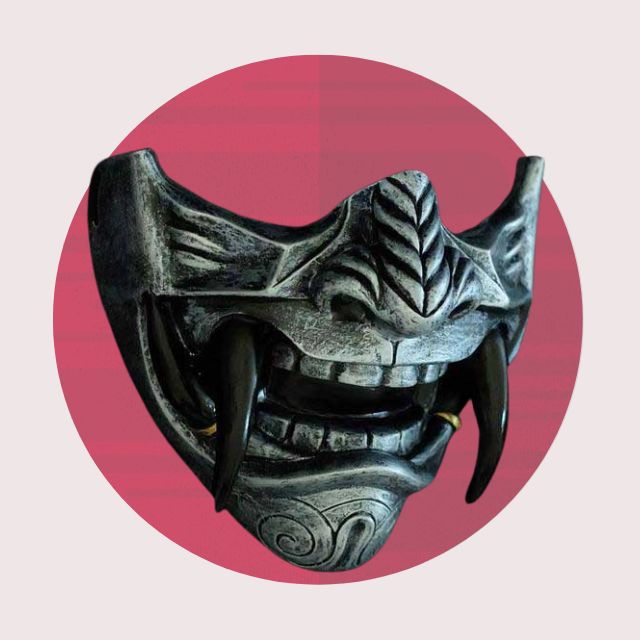
Explore our Oni Mask collection and Hannya Mask collection at Eiyo Kimono.
The Hannya Mask In Modern Culture
The hannya mask has traveled far beyond the Noh theatre stage into every corner of global popular culture:
Tattoo art — the hannya mask tattoo remains one of the most requested Japanese tattoo designs worldwide. From traditional irezumi to modern interpretations — the symbol speaks across cultures and generations.
Anime and manga — the hannya appears across iconic series as a symbol of supernatural transformation, inner darkness and psychological complexity.
Japanese streetwear — the hannya has become one of the defining motifs of Japanese streetwear globally. Its visual power and cultural depth make it a natural choice for anyone who wants fashion with genuine meaning.
Music and film — used across global productions to communicate obsession, transformation and the supernatural. The visual language of the hannya translates instantly across cultural boundaries.
Home display — in Japan and worldwide, the hannya mask is displayed in homes as a protective talisman and as a piece of authentic Japanese folk art.
Hannya Mask FAQ
What does the hannya mask represent?
The hannya mask represents the spirit of a woman transformed into a demon by jealousy and obsession. It carries layered meaning — warning against destructive emotion, symbolizing transformation through suffering and serving as a protective talisman against evil spirits.
What is the hannya mask tattoo meaning?
A hannya mask tattoo can represent protection, personal transformation, duality, strength through suffering or a warning against destructive emotion. The meaning is deeply personal — rooted in centuries of Japanese Buddhist and theatrical tradition.
Is the hannya mask good or evil?
Both. The hannya mask meaning embraces duality — the mask is simultaneously a symbol of destructive rage and a protective talisman. In Japanese culture good and evil are not always opposites. The hannya embodies both within a single expression.
What is the difference between a white and red hannya mask?
Color communicates social status and emotional intensity in Noh theatre tradition. White represents aristocratic refinement and cold sorrow. Red represents raw uncontrollable rage from a spirit of lower social standing. Gold represents divine supernatural power beyond human reach.
Where can I buy an authentic hannya mask?
Eiyo Kimono offers a curated Hannya Mask collection with worldwide shipping — available in red, black, gold, silver and white. Each mask is crafted in durable resin faithful to the traditional Japanese Noh theatre aesthetic.

Written by Jennifer Moreau